


Changing a tire might seem tough, but it’s a skill everyone can learn. This article will show you how to safely and effectively change a flat tire on your car. Knowing how to do this yourself can save you time and money, and it can also give you peace of mind in case of an emergency.
We’ll walk you through each step, from gathering the right tools to tightening the last lug nut. You’ll learn how to use a car jack, remove lug nuts, and install your spare tire. We’ll also cover important safety tips to keep you safe while working on the roadside. So, let’s get started and turn you into a tire-changing pro.
Tire Changing Tools Needed
Before you start, make sure you have all the necessary tools. Having the right equipment will make the job much easier and safer. Here’s a list of essential tire changing tools:
- Spare tire (inflated): Ensure your spare tire is in good condition and properly inflated.
- Car jack: A jack is used to lift the vehicle off the ground.
- Lug wrench: Use this to loosen and tighten the lug nuts on the wheel.
- Owner’s manual: Consult your vehicle’s manual for specific instructions and jack point locations.
- Gloves: Protect your hands from dirt and injury.
- Wheel chocks: These prevent the vehicle from rolling while you’re changing the tire.
- Flashlight (or headlamp): Useful if you’re changing a tire in the dark.
- A piece of wood (optional): Provides a stable base for the jack on soft or uneven surfaces.
Step-by-Step Tire Change
Changing a tire involves several steps, each important for your safety and the proper installation of the spare. Follow these steps carefully:
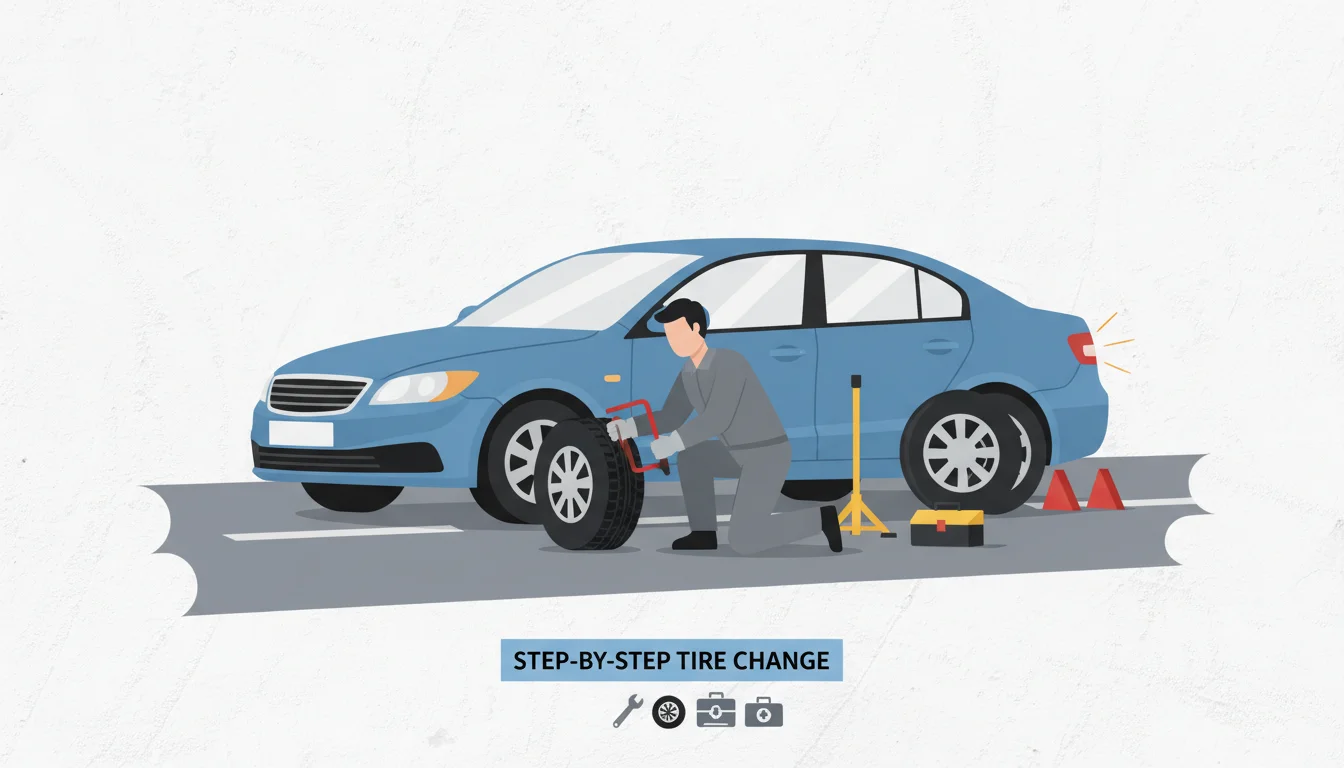
1. Park in a Safe Location
Pull over to a safe, level location away from traffic. Turn on your hazard lights to alert other drivers. Make sure the car is in park (or in gear for a manual transmission) and engage the parking brake.
Safety first. Place warning triangles behind your car to warn other drivers.
2. Gather Your Tools and Materials
Collect your spare tire, jack, lug wrench, owner’s manual, and any other tools you’ll need. Lay them out so they’re easily accessible.
Having everything ready will make the process smoother and faster.
3. Apply the Parking Brake and Wheel Chocks
Make sure the parking brake is firmly engaged. Place wheel chocks behind the wheels that are opposite the flat tire. This prevents the car from rolling.
Double-check that the chocks are securely in place.
4. Loosen the Lug Nuts
Use the lug wrench to loosen the lug nuts on the flat tire. Turn the wrench counterclockwise. Don’t remove the nuts completely at this stage. Just break them loose.
If the nuts are too tight, try using your foot for extra leverage. Make sure the wrench is securely seated on the nut to avoid slippage.
5. Position the Jack
Consult your owner’s manual for the correct jacking points on your vehicle’s frame. Place the jack in the designated spot. Make sure the jack is on a level, solid surface. If the ground is soft, use a piece of wood under the jack for stability.
Incorrect jack placement can damage your car. Refer to the manual.
6. Jack Up the Vehicle
Slowly raise the vehicle with the jack until the flat tire is off the ground. You need enough clearance to remove the flat tire and install the spare. Ensure the car is stable before proceeding.
Avoid placing any part of your body under the vehicle while it’s supported only by the jack.
7. Remove the Lug Nuts and the Flat Tire
Now, fully unscrew the lug nuts and carefully remove them. Keep them together in a safe place. Take off the flat tire and set it aside.
Be careful when removing the tire, as it can be heavy.
8. Mount the Spare Tire
Align the spare tire with the wheel studs and carefully mount it onto the hub. Make sure the wheel sits flush against the hub. Once aligned, put the lug nuts back on by hand, tightening them in a star pattern.
A star pattern ensures even pressure on the wheel.
9. Lower the Vehicle and Tighten the Lug Nuts
Lower the vehicle until the spare tire touches the ground, but the full weight of the car isn’t on it yet. Use the lug wrench to tighten the lug nuts in a star pattern. Once they’re snug, lower the vehicle completely and give the lug nuts a final tightening.
Don’t overtighten the lug nuts, as this can damage them or the wheel studs.
10. Final Check and Stow Tools
Give the lug nuts one last check to make sure they’re tight. Stow the flat tire, jack, lug wrench, and other tools in their proper places. Check the spare tire’s pressure and inflate if necessary. As soon as possible, get your flat tire repaired or replaced.
A spare tire is usually a temporary solution.
When to Change a Tire
Knowing when to change a tire is crucial for your safety. Here are some situations when you should consider changing your tires:
- Puncture or damage: If your tire has a puncture, cut, or bulge, it needs to be changed.
- Worn tread: Check your tire tread depth regularly. If it’s below the legal limit, replace the tire.
- Sidewall damage: Any damage to the sidewall of a tire can compromise its integrity.
- Age: Even if the tread looks good, tires degrade over time. Check the manufacturing date and replace tires that are more than six years old.
- Uneven wear: Uneven wear patterns can indicate suspension problems or improper inflation.
Tire Change Safety Tips
Your safety is the top priority when changing a tire. Keep these safety tips in mind:
- Park on a level surface: Avoid changing a tire on a hill or uneven ground.
- Use wheel chocks: Always use wheel chocks to prevent the car from rolling.
- Never go under a car supported only by a jack: Use jack stands if you need to work under the vehicle.
- Keep a safe distance from traffic: Choose a location away from the flow of vehicles.
- Use gloves: Protect your hands from dirt and potential injuries.
- Don’t overtighten lug nuts: Overtightening can damage the nuts and studs.
- Check spare tire pressure: Ensure your spare tire is properly inflated before use.
- Consult your owner’s manual: Follow the manufacturer’s instructions for your specific vehicle.
How Long to Change a Tire
The time it takes to change a tire can vary depending on your experience and the conditions. Generally, it should take between 15 to 30 minutes. If you’re not experienced, it might take longer. Practice makes perfect, so consider doing a practice run in your driveway before you need to do it on the road.
Rushing can lead to mistakes and injuries, so take your time and follow the steps carefully.
How to Loosen Tight Lug Nuts
Sometimes, lug nuts can be incredibly difficult to loosen. Here are some tips to help you tackle those stubborn nuts:
- Use a longer lug wrench: A longer wrench provides more leverage.
- Try a penetrating oil: Apply penetrating oil to the nut and stud, and let it sit for a few minutes.
- Use your foot: Place the wrench on the nut and carefully step on the end of the wrench for extra force.
- Ask for assistance: If you’re unable to loosen the nuts yourself, call for roadside assistance.
Common Tire Changing Mistakes
Avoiding common mistakes can save you time and prevent damage to your vehicle. Here are a few pitfalls to watch out for:
- Forgetting to engage the parking brake: This can cause the car to roll.
- Not using wheel chocks: Wheel chocks add an extra layer of safety.
- Incorrect jack placement: Placing the jack in the wrong spot can damage the car’s frame.
- Overtightening lug nuts: This can strip the threads or damage the wheel.
- Using the wrong tools: Always use the correct tools for the job.
- Ignoring the owner’s manual: The manual provides important information specific to your vehicle.
What to Do With a Flat Tire
After you’ve changed your tire, you need to decide what to do with the flat tire. Here are your options:
- Repair: If the tire is repairable, take it to a tire shop to have it patched or plugged.
- Replace: If the tire is damaged beyond repair, you’ll need to replace it with a new one.
- Dispose: If you’re replacing the tire, dispose of the old one properly. Many tire shops will recycle old tires.
Don’t drive on a damaged tire for extended periods.
DIY Tire Replacement
While this guide focuses on changing a flat tire with a spare, you might consider replacing all your tires yourself. This can save you money, but it requires more specialized tools and knowledge. If you’re comfortable working on cars and have the right equipment, it’s a viable option. However, it’s important to follow safety precautions and ensure the job is done correctly.
Improper tire installation can be dangerous. If you’re unsure, consult a professional.
Best Way to Change a Tire
The “best” way to change a tire involves a combination of safety, efficiency, and proper technique. Prioritize safety by parking in a safe location, using wheel chocks, and following the correct jacking procedures. Efficiency comes from having all the necessary tools readily available and following a step-by-step process. Proper technique includes loosening and tightening lug nuts in a star pattern and consulting your owner’s manual for specific instructions.
Combining these elements will help you change a tire safely and effectively.
Where to Place Jack on Car
Correct jack placement is key to preventing damage to your vehicle. Most cars have designated jacking points on the frame, usually near the front and rear wheels. These points are reinforced to handle the weight of the car. Consult your owner’s manual for the exact location of these jacking points.
Never place the jack on plastic components or suspension parts.
Emergency Tire Change
An emergency tire change requires quick thinking and a calm approach. Assess the situation, ensure your safety, and follow the steps outlined in this guide. If you’re uncomfortable or unable to change the tire yourself, call for roadside assistance.
Stay calm and focus on the task at hand.
Fix a Flat Tire Yourself
Fixing a flat tire yourself is possible if you have the right tools and knowledge. This guide provides a comprehensive overview of the process, from gathering tools to final checks. By following these steps and prioritizing safety, you can confidently change a flat tire on your own.
Remember, practice and preparation are key to success.
Jacking Up a Car Safely
Safely jacking up a car involves several key steps. First, park on a level surface and engage the parking brake. Then, consult your owner’s manual for the correct jacking points. Position the jack securely and slowly raise the vehicle. Ensure the car is stable before proceeding with any work. Never go under a car supported only by a jack. Use jack stands for added safety.
Safety is paramount when jacking up a car.
Installing Spare Tire
Installing a spare tire involves aligning the wheel with the wheel studs, tightening the lug nuts in a star pattern, and lowering the vehicle. Make sure the spare tire is properly inflated and in good condition before installation. After installation, check the lug nuts again after driving a short distance. Remember, a spare tire is usually a temporary solution, so get your flat tire repaired or replaced as soon as possible.
Proper installation ensures the spare tire functions correctly.
Conclusion
Changing a tire might seem intimidating, but with the right knowledge and tools, it’s a manageable task. By following these steps and prioritizing safety, you can confidently handle a flat tire situation on your own. Remember to consult your owner’s manual for specific instructions and always double-check your work. Now you’re equipped to tackle that flat tire and get back on the road safely.